Tenzr Health
What 91.6 Days of Engagement Can Tell Us About Digital Care
.
At the 2026 Canadian Stroke Congress, Nova Scotia Health presented findings from an 11-month evaluation of Tenzr within the Acquired Brain Injury Program at the Nova Scotia Rehabilitation and Arthritis Centre.
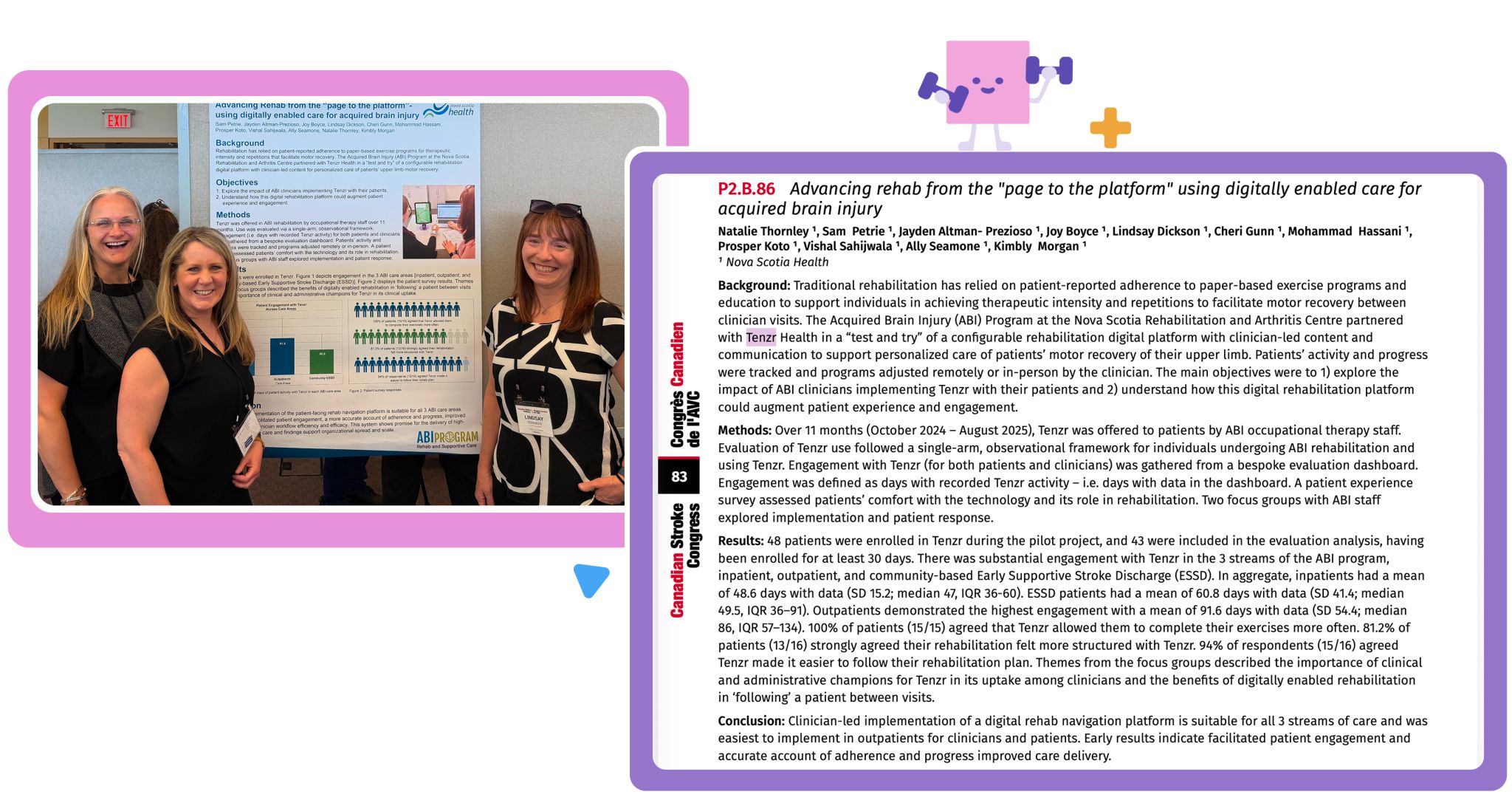
The evaluation examined how Tenzr supported upper-limb rehabilitation following stroke and acquired brain injury as part of routine inpatient, outpatient, and community-based care.
Full report here (Page 83)
At a glance
48 patients enrolled
Three rehabilitation settings
91.6 average days of outpatient engagement
100% of surveyed patients reported completing exercises more often
94% reported that their rehabilitation plan was easier to follow
How Nova Scotia Health used Tenzr
Tenzr was introduced across inpatient rehabilitation, outpatient rehabilitation, and community-based Early Supported Stroke Discharge.
Clinicians used the platform to deliver personalized rehabilitation content, communicate with patients, review activity and progress, and adjust programs remotely or during appointments.
From October 2024 through August 2025, 48 patients enrolled overall. And 43 patients who had been enrolled for at least 30 days were included in the engagement analysis.
What the Evaluation Found
Patients continued recording activity throughout their time in each program. Outpatient participants showed the longest engagement, averaging 91.6 days, compared with 60.8 days for Early Supported Stroke Discharge participants and 48.6 days for inpatients.
Patient survey responses also showed:
100% agreed that Tenzr allowed them to complete their exercises more often.
94% agreed that Tenzr made their rehabilitation plan easier to follow.
81.2% strongly agreed that their rehabilitation felt more structured with Tenzr.
Clinicians also reported having a clearer view of patient participation and progress between appointments. Rather than relying only on what a patient could remember at their next visit, they could review recorded activity, use that information to guide the conversation, and adjust the program when needed.
What the Results Demonstrate
These findings reflect Tenzr’s successful use and integration into routine clinical care across multiple rehabilitation settings. They show how the platform supported patient follow-through while giving clinicians practical information to guide and adapt care over time.
For Nova Scotia Health, digitally enabled care provided a practical way to extend support beyond scheduled appointments and maintain visibility as patients progressed through recovery.
Ready to explore what this could look like in your organization? Schedule a demo or contact us at hello@tenzrhealth.com to learn how Tenzr can fit within your existing workflows, support patient adherence, and give care teams better visibility between visits.