Tenzr Health
How Golden Gate Hand Therapy Got Started with Tenzr in Less Than 30 Days
.
Golden Gate Hand Therapy started with digital home exercise plans. Your organization may start somewhere else.
For many healthcare systems, therapy clinics, and rehabilitation organizations, the decision to modernize home exercise programs is not usually held back by a lack of interest.
Most teams already know the limitations of paper handouts. Patients misplace them, forget what they were shown, or struggle to follow exercises correctly once they are back at home. Clinicians also spend valuable time re-explaining the same exercises, recreating programs, and trying to understand what happened between appointments.
The hesitation is often more practical.
Clinics are busy. Therapists have full schedules. Practice managers are trying to protect clinical time, not add another system for staff to learn. Even when a digital solution could improve the experience for patients and providers, the implementation question matters.
How much added work will this actually take?
That was the relevant question for Golden Gate Hand Therapy, a specialist clinic in hand and upper extremity rehabilitation based in San Francisco, and it is a common one across therapy, rehabilitation, MSK, and orthopedic care settings.
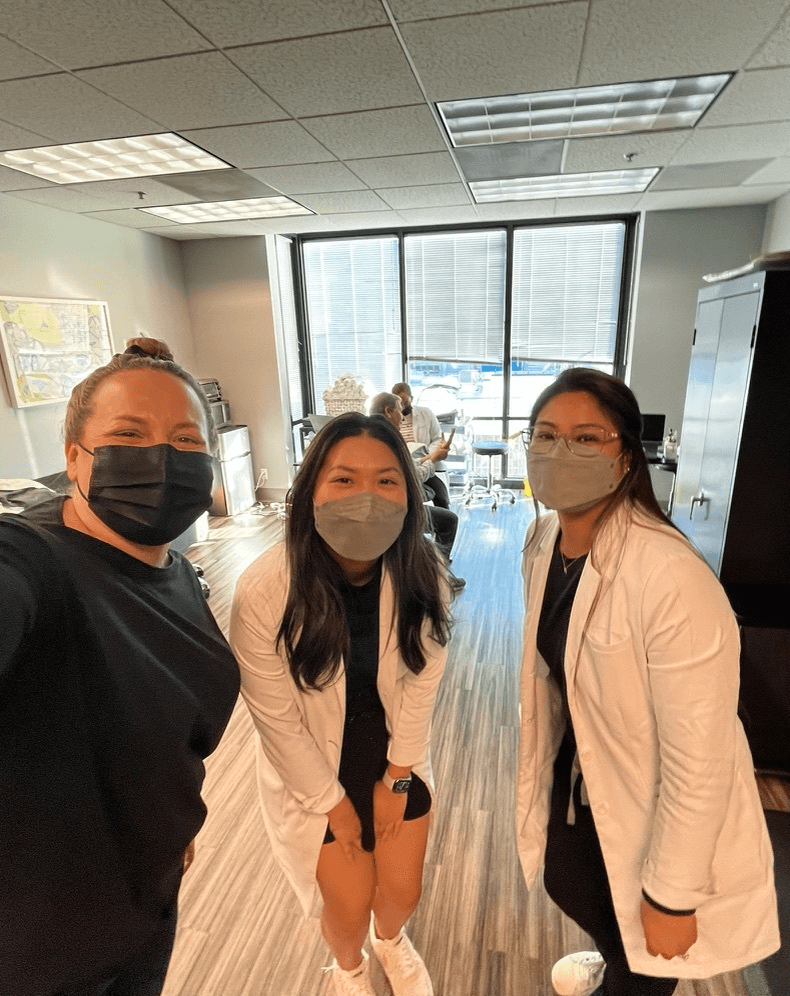
Our Director of Clinical Relations, Jody with Golden Gate Hand Therapy's Therapists.
Clinicians may want better patient engagement, more visibility between visits, and a more modern way to support home programs. But the solution still needs to fit into the way care already happens. It cannot require teams to rebuild workflows from scratch, replace the clinical content they trust, or create more administrative work for clinicians.
That is where Tenzr became a fit.
For Golden Gate Hand Therapy, the first problem to solve was the home exercise program. But the larger story is not only about replacing paper handouts. It is about how Tenzr can be configured around a specific care workflow, patient population, and operational need.
A familiar but inefficient HEP workflow
In the past, Golden Gate Hand Therapy relied on traditional paper-based home exercise materials.
The process was familiar, but it created friction in daily care. Patients could lose or forget their handouts. Exercises often needed to be explained repeatedly. Therapists had limited visibility into whether patients were completing their programs, how they were feeling between visits, or whether their symptoms had changed.
That gap matters because home exercise is key to recovery, but adherence remains a challenge. Only 35% of patients typically adhere to their home exercise programs.
For Melanie, OTR/L, CHT, and founder of Golden Gate Hand Therapy, this had become a recurring issue. Before introducing Tenzr, she was using outdated, pre-photocopied exercise cards and spending valuable time explaining the same exercises over and over again.
The issue was not only the handouts themselves. It was the lack of connection between what happened in the clinic and what happened after the patient left.
At follow-up visits, Melanie often spent 5-10 minutes figuring out where the patient was in their recovery. Without enough data to guide treatment decisions, each visit could feel like it was starting from scratch.
Golden Gate Hand Therapy saw an opportunity to improve that experience.
Why Tenzr made sense for the clinic
Golden Gate Hand Therapy was not looking for a generic digital tool that would force the clinic into a completely new process. The team needed something that could support the way they already delivered care.
One of the reasons Melanie chose Tenzr was that it could be custom matched to the clinic’s existing handouts. That meant the team did not have to abandon the clinical content they already used or start from a blank slate. Tenzr could take the foundation already in place and make it easier for patients to access, understand, and follow.
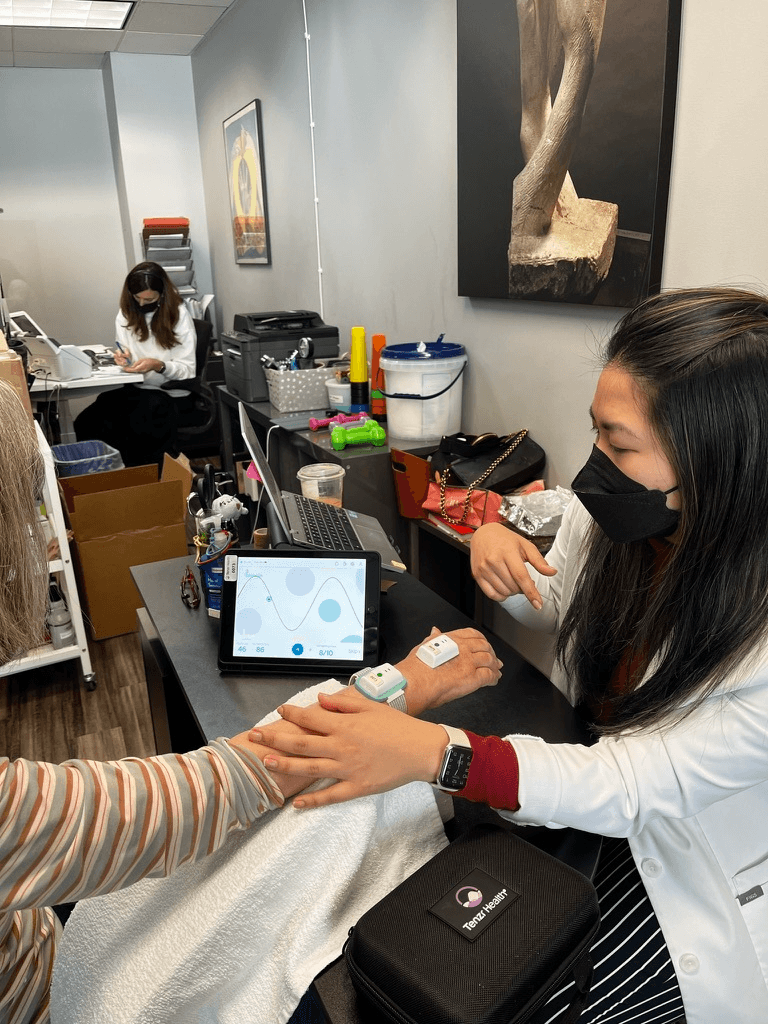
Golden Gate Hand Therapy using Tenzr’s optional sensors in clinic.
That matters across therapy and rehabilitation settings. Home programs, education, check-ins, and care pathways reflect clinical reasoning, patient needs, progression strategy, and the way each organization delivers care.
A platform needs to work around that. It should make care easier to deliver, not ask teams to reshape care around the software.
The rollout: starting with what the clinic already used
The implementation process began with the clinic’s existing materials.
Melanie pulled together 70 of Golden Gate Hand Therapy’s most-used paper handouts. That step took about an hour. From there, Tenzr helped convert the material into digital content, including video-based exercise guidance. Once the content was prepared, Melanie reviewed the videos to make sure the exercises were accurate and represented the way the clinic wanted them delivered.
The clinic was then able to get the team up and running with one training session.
That part of the story matters. A digital tool can sound valuable in theory, but if it takes too much staff time, disrupts daily operations, or requires a full workflow rebuild, it becomes harder to justify.
Golden Gate Hand Therapy did not need to recreate its home exercise program from scratch. It started with the content therapists were already using. Tenzr helped turn that content into a more modern patient experience. The team reviewed the material, learned the workflow, and began using the platform in a way that felt familiar rather than disruptive.
What changed for patients
For patients, the biggest change was that their home program became easier to access and follow.
Instead of relying only on paper instructions, patients could view their exercises on their phones, follow step-by-step guidance, and watch videos that showed correct form and technique. Updates to their program could happen based on the direction of their care team, so the plan could continue to reflect their current stage of recovery.
Melanie found that patients engaged more with the new dynamic content. A printed image can be helpful, but video gives patients a clearer way to understand movement, pacing, and positioning when they are practicing outside the clinic.
The patient experience also became more connected.
One patient described the impact this way:
It made me feel like I had the support of the clinic and my therapist. I could log things going on for review the next time I saw them to make sure I stayed on track with my recovery.
Patients are not only looking for a list of exercises. They want to know what to do, how to do it, and whether their care team is still connected to their progress when they are not physically in the clinic.
What changed for therapists
The patient experience improved first, but the benefits did not stop there.
As patients engaged with their programs between visits, therapists gained better visibility into how they were doing. Melanie could review patient progress before the appointment, including information such as pain levels, mobility, daily activities, and other recovery signals.
That changed the starting point for follow-up visits.
Instead of spending the first part of the appointment catching up, the therapist could begin with a better understanding of the patient’s current status. That made it easier to adjust the home program, focus the session, and make better use of in-clinic time.
Melanie described this as being able to walk into each session already knowing how a patient was doing.
Less guesswork. Faster adjustments. Smarter sessions.
For clinicians, that kind of visibility matters because clinical time is limited. Tenzr helped shift some of the catch-up work out of the appointment itself, giving patients a clearer way to follow and report on their program and therapists a clearer picture of what needed attention.
What changed for the clinic
At the clinic level, Golden Gate Hand Therapy saw Tenzr support both their care delivery and operations.
Home exercise program delivery became more efficient. Therapists could update programs more quickly. Patients had better access to guidance between visits. Follow-ups could begin with more context. The clinic also saw benefits around patient satisfaction, engagement, fewer dropouts, fewer inbound patient calls, and reimbursable RTM workflows.
The value was not limited to replacing paper with an app. The bigger change was that the clinic’s existing care process became easier to deliver, easier for patients to follow, and easier for therapists to adjust based on patient progress.
For therapy and rehabilitation organizations trying to modernize care, that distinction matters. A digital platform should not simply add another task to the day. It should help the team make better use of the work they are already doing.
Conclusion
Golden Gate Hand Therapy’s experience shows that getting started with Tenzr does not have to be a heavy lift.
In this case, the starting point was the clinic’s home exercise program. The clinic did not need to abandon its existing materials, redesign its workflow, or ask patients to keep relying on paper handouts that could be lost, forgotten, or difficult to follow at home.
Instead, the clinic started with what it already used. Tenzr helped digitize and organize that content, support patient engagement between visits, and give therapists better visibility into patient progress.
That is the broader takeaway. Tenzr is not limited to one use case. It can be configured around the specific problem a care team is trying to solve, while building on the clinical knowledge, materials, and workflows already in place.
Ready to see how Tenzr could fit into your clinic? Schedule a demo or contact us at hello@tenzrhealth.com to explore how Tenzr can support your existing workflows, improve visibility between visits, and help patients stay engaged throughout their care journey.